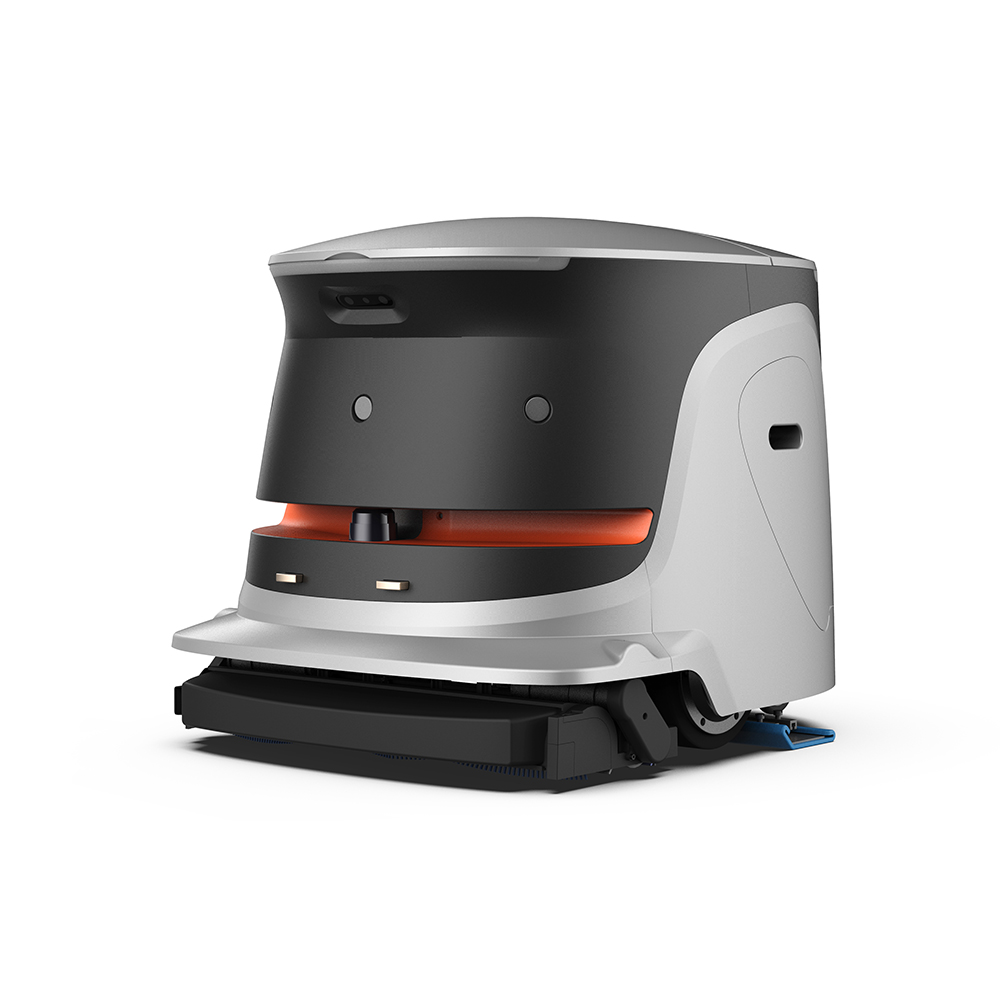
What is a commercial robot vacuum?
A commercial robot vacuum is a professional autonomous cleaning robot designed for repeatable facility cleaning. Some models focus on vacuuming and sweeping. Others combine vacuuming with scrubbing, dust-pushing, mopping, disinfection, route reports, and fleet management.
For B2B buyers, the important question is not whether the robot can move by itself. The important question is whether it can clean the required floor type, finish within the shift window, work around people safely, and provide service records that the facility team can trust.
Which robot type fits each facility?
| Facility need | Best-fit robot class | What to confirm |
|---|---|---|
| Office, clinic, hotel corridor, showroom | Compact multi-function robot | Noise, edge cleaning, narrow passage width, maintenance access |
| Warehouse support areas and retail aisles | Commercial vacuum and mop robot | Dust load, floor material, route scheduling, staff handoff |
| Warehouse, mall, station, airport | Autonomous floor scrubber | Tank size, scrubbing width, runtime, recharge and water workflow |
| Campus, loading zone, outdoor route | Outdoor sweeper | Debris type, slope, weather exposure, trash-bin capacity |
What should buyers compare?
Start with measurable constraints: square meters per shift, aisle width, floor material, obstacle density, cleaning frequency, staff availability, and required proof-of-work reports. A smaller robot can be better than a larger scrubber if the site has tight spaces or mixed public traffic.
| Data point | Why it matters | Source to verify |
|---|---|---|
| Clean and dry walking surfaces | Robotic cleaning should support, not replace, a facility's slip and trip prevention plan. | OSHA 1910.22 |
| Autonomous navigation and safety zones | Robots working around people need controlled routes, sensors, and stop procedures. | ISO 3691-4 |
| Professional service robot market context | Commercial cleaning and logistics robots are part of a broader professional service robot category. | International Federation of Robotics |
How much does a commercial robot vacuum cost?
Commercial robot vacuum pricing depends on the robot class, sensors, cleaning modules, battery, service plan, spare parts, and order quantity. A compact robot is usually quoted differently from a large autonomous floor scrubber with a docking or water station.
Ask suppliers to quote the robot, consumables, warranty, spare parts, training, shipping, customs documents, and optional software separately. This makes total cost of ownership easier to compare across suppliers.
Deployment checklist for buyers
- Send a floor map, photos, floor material, and daily cleaning schedule.
- Measure the narrowest passage, elevator route, and storage location.
- Confirm water refill, drainage, charging, and staff handoff workflow.
- Request a final datasheet, certification package, spare-part list, and warranty terms before purchase.
FAQ
Can a commercial robot vacuum replace cleaners?
It usually replaces repetitive floor routes, not the whole cleaning team. Staff still handle detail cleaning, exceptions, safety checks, and guest-facing tasks.
Is a robot vacuum enough for commercial floors?
It depends on the soil. Dry dust and debris may fit vacuum or sweep modes. Spills, grease, and heavy traffic often require scrubbing or combined cleaning.
What floor types can commercial cleaning robots handle?
Common indoor targets include tile, PVC, terrazzo, marble, epoxy, concrete, and short carpet. Final compatibility should be confirmed against the model datasheet.
Do commercial robot vacuums work around people?
Professional robots use sensors, route rules, and emergency stops, but the site still needs a deployment plan and trained staff.
What should I send for a quote?
Send floor area, floor type, cleaning frequency, site photos, aisle width, destination country, quantity, and any OEM or distributor requirements.